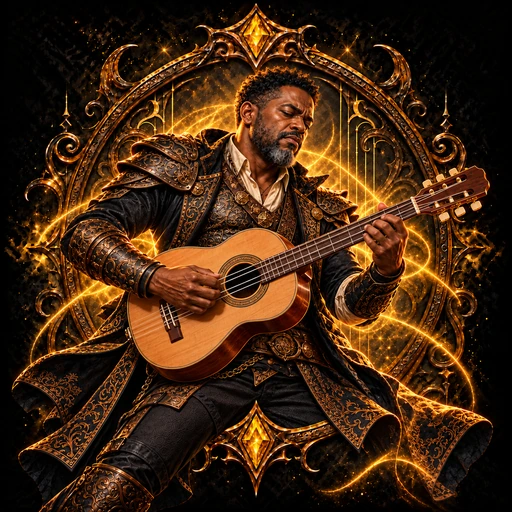
The Tres, Figure First
Every page here speaks tres as a first language: what a montuno asks of a chord, which course each eighth note strikes, and the rests that give the figure its push.
Free, playable references for the Cuban tres — every voicing charted for the G–C–E courses, with the figure it wants alongside and every derived number recomputed in CI.
One Neck, Three Cells
One instrument covered deeply rather than four covered thinly: the three-course tres, plus the three guajeo cells that turn its chords into music.

Cuban Tres
- Tuned G–C–E — the open courses spell C major
- 3 doubled courses on one fretted neck
- The rhythm engine of son cubano

Son Montuno
- Bass anchor on the downbeat
- Two rests, both load-bearing
- A struck last eighth — the push
Guajira
- Eight unbroken eighths
- Low to high and back, twice a bar
- The evenness teacher
Cha-Cha-Chá
- Spaced strikes, declared rests
- A three-note run home
- The comping cell
What Lives Here
Chords
Every key and quality charted course by course, frets and fingers named — the stations a guajeo passes through.

Scales
Note maps across the three courses with every root marked, ready to be phrased as runs and fills.

Fretboard Explorer
Light up any set of notes across the GCE neck — small enough to actually memorise.
Progressions
Each key's chord family, arranged for the vamp — see which two chords the loop leans on.

Exercises
Daily picking and timing drills with tab and playback built in.

The Three Guajeos
Son montuno, guajira, cha-cha-chá — every cell recomputed note by note in CI, rests included.

Chord of the Day
The network's shared daily pick — walked into the one-bar figure its tones imply.

Free Tools
Tuner, metronome, theme builder — in the browser, no sign-up.
How It Works
Start From a Root
Pick a root and a quality — every charted voicing arrives on the G–C–E courses with its frets and fingers named, drawn for this neck and no other.
Read It Course by Course
Charts name what each course carries, scale maps mark every root, and the cell tables say which eighth strikes which course — and which eighths stay silent.
Set It Moving
Playback on every voicing, drills with tab and sound, and three computed cells to run any chord through — a chord you can only strum is a chord you do not own yet.
The Figure's Home
Tres Warrior is the Warrior Network's deep home for the Cuban tres. On a tres the interesting question is rarely which chord — it is what order the chord's tones come out in, and where the silences go. So this site is built from the figure outward: chords charted as stations a guajeo passes through, scales mapped as raw material for repeating lines, and every derived number recomputed in CI rather than copied from a book.
Go Deeper
Guides and references worth bookmarking: the three cells · son montuno · guajira · cha-cha-chá · the daily figure · the metronome · all tools. Want the same chord on guitar, ukulele, or any of 20+ string instruments? Our sister site String Warrior compares them all — this site goes deep where that one goes wide.
Tres Questions, Answered
More on the full FAQ page.
- What makes Tres Warrior different from a general chord site?
- Every page is written from the figure inward: chords are charted as the stations a guajeo passes through, scales are mapped as material for repeating lines, and the three cells are recomputed note by note in CI rather than copied from a book.
- What tuning does this site use?
- G–C–E, the modern Cuban standard the registry models — three doubled courses whose open notes already spell a C major triad, with the G course sounding above the C beside it.
- I play guitar. Will any of this carry over?
- The left hand carries over quickly — three courses are a subset of what your fingers already do. What is new is the right hand's job: a tres states harmony as a repeating one-bar figure rather than a strum, and the cell pages teach exactly that.
- Do I need to read music to use this site?
- No. Everything here is charts, tab, and playback — course numbers, fret numbers, and audio on every voicing and drill, so the ear can vet a shape before the fingers commit.
- Does any of this cost money?
- No — every chart, cell table, drill, and tool on Tres Warrior is free, with no ads, no account, and no upsell waiting at the end.